
The three required disclosures
Every SMS opt-in point must display:- Message frequency: e.g., “Message frequency varies” or “You’ll receive up to 4 messages per month”
- Cost notice: exactly “Msg&data rates may apply” or “Msg&data rates apply”
- Opt-out instructions: exactly “Reply STOP to opt out” (STOP is the required keyword)
- Help instructions: exactly “Reply HELP for help”
- Identify the business responsible for the messages
- Explain the purpose of the messages (e.g. account notifications, promotional messages, etc.)
- Link to privacy policy
- Link to terms of service
Where to put disclosures
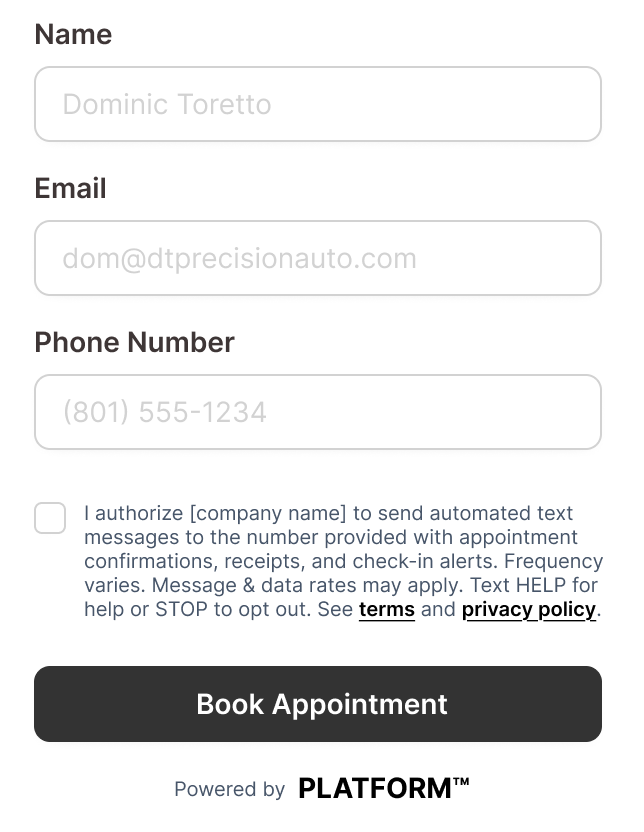
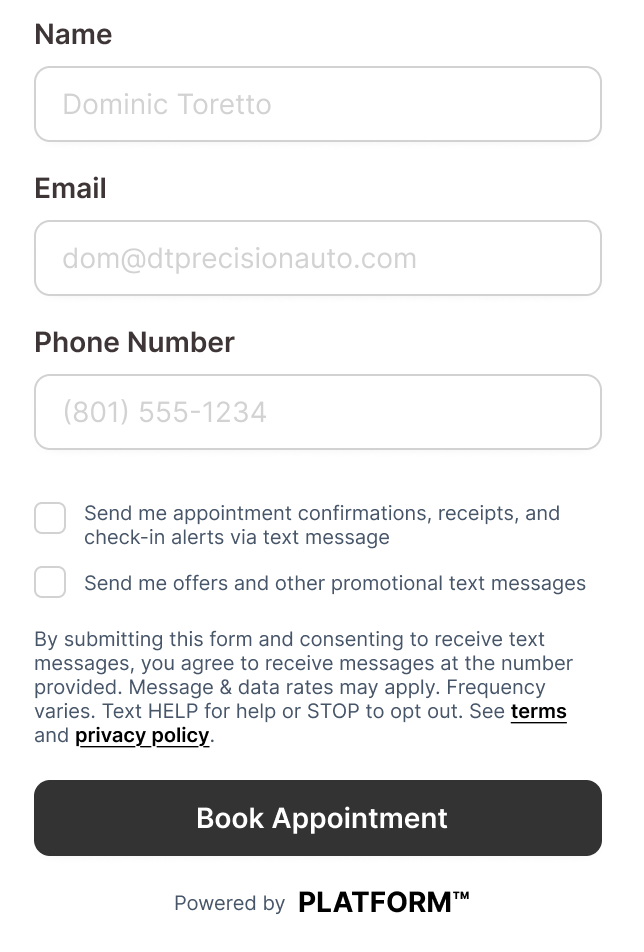
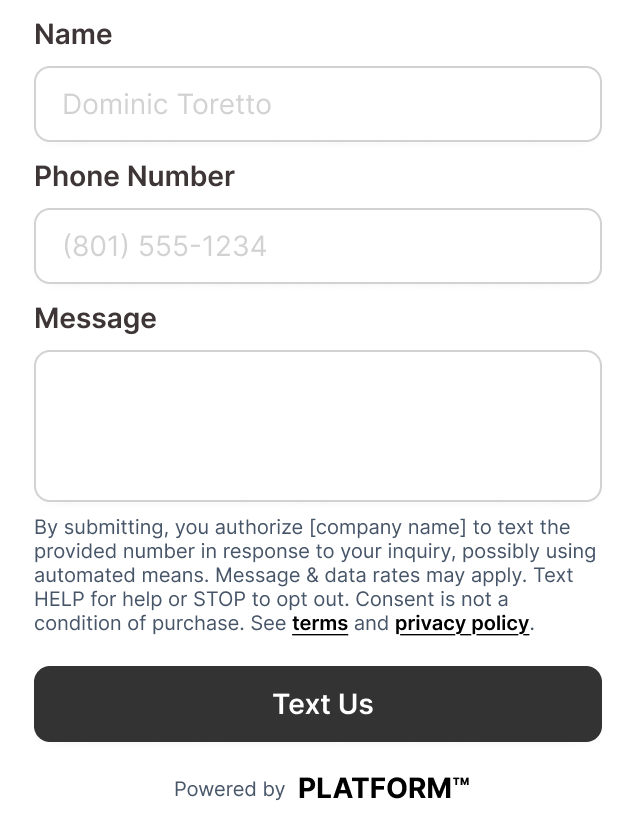
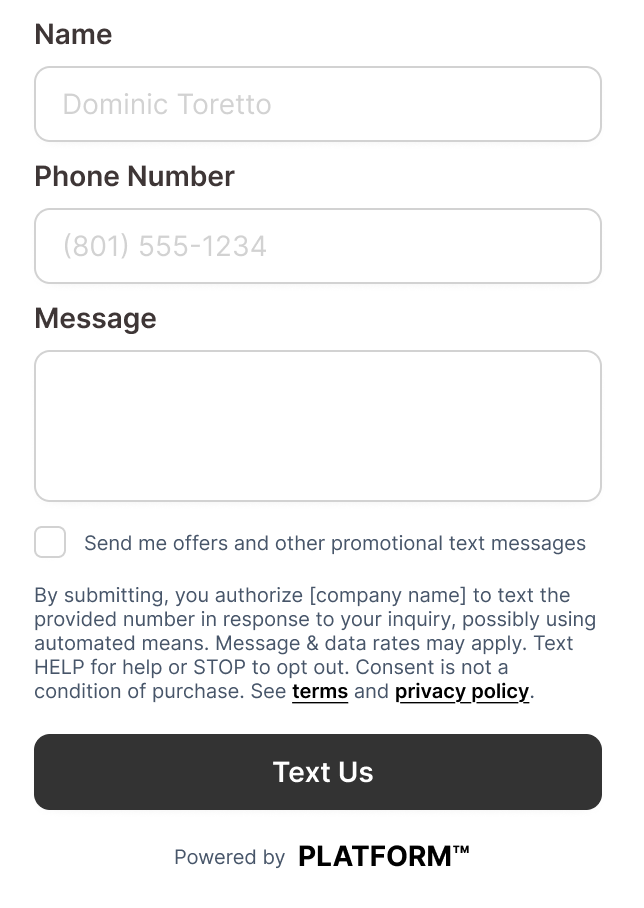
Disclosures must appear at the point of opt-in: next to or immediately below the phone number field and consent checkbox. They should be readable without scrolling. Burying them in a terms of service page or a footer is insufficient. The font size should be legible (not 8px gray text). Where possible, reviewers visit your actual website, not just screenshots.Canonical compliance message
When you send a first message to a new subscriber, include the full opt-in confirmation:“You are now opted in to messages from Acme Corp. Frequency varies. Msg&data rates apply. Reply STOP to opt out.”Replace “Acme Corp” with your actual brand name, not a placeholder.
Templates by use case
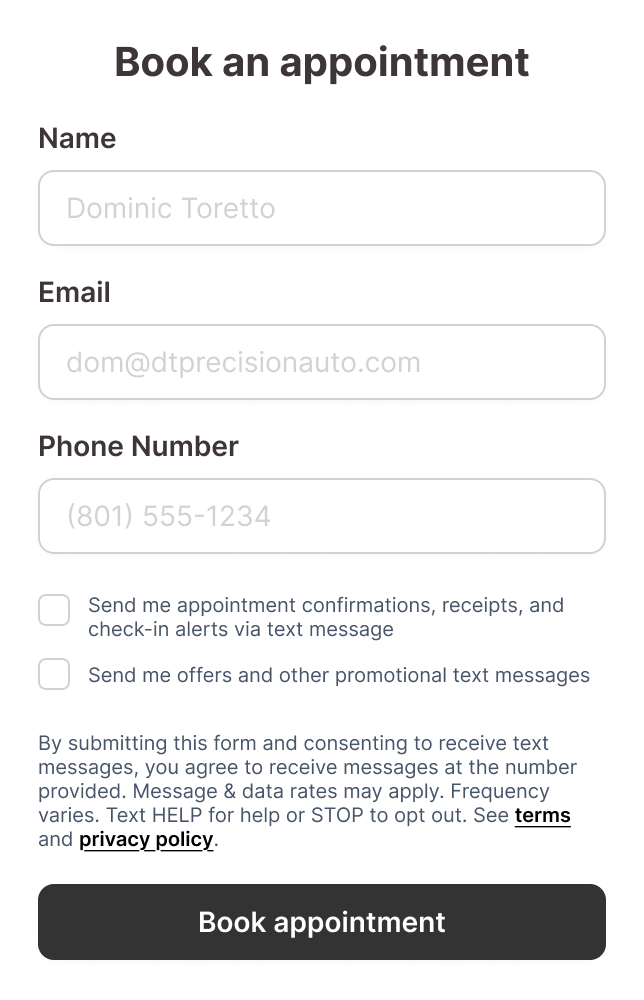
Marketing
Opt-in checkbox label:“I agree to receive promotional text messages from Acme Corp”Disclosure text beneath the checkbox:
“Message frequency varies. Msg&data rates apply. Reply STOP to opt out. View our Privacy Policy.”Confirmation message:
“Acme Corp: You’re in! Expect exclusive deals and updates. Msg freq varies. Msg&data rates apply. Reply STOP to opt out.”
Transactional (account notifications, order updates)
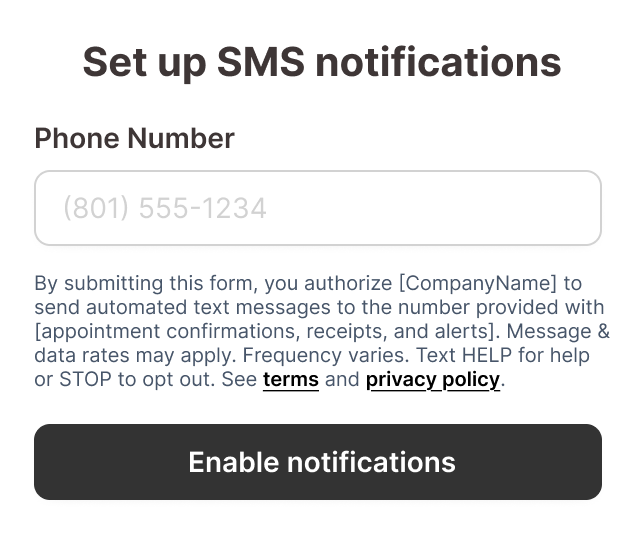
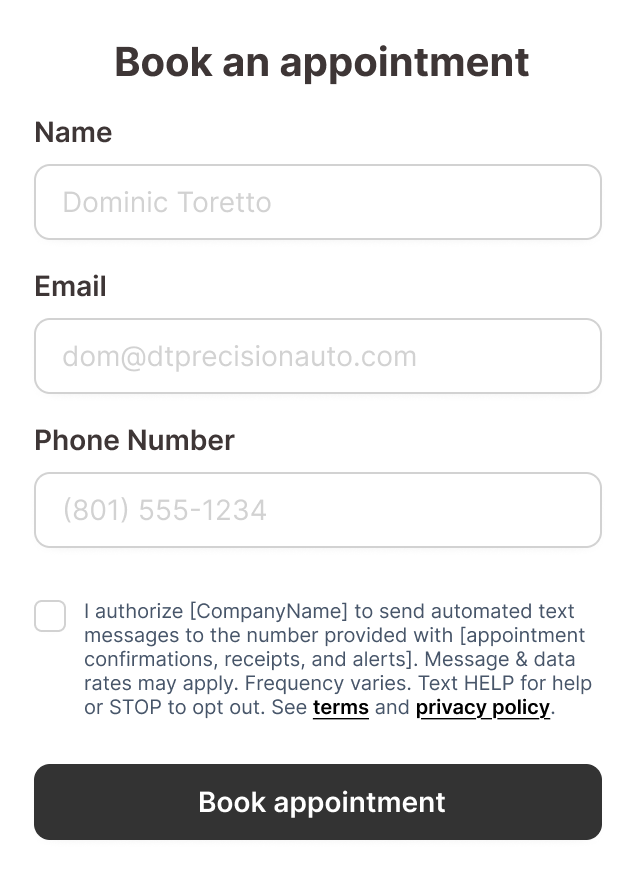
Opt-in checkbox label:“Send me text message updates about my orders and account”Disclosure:
“You may receive messages about order status, shipping, and account activity. Message frequency varies. Msg&data rates apply. Reply STOP to opt out.”Confirmation message:
“Acme Corp: You’ll now receive order and account updates by text. Reply STOP to opt out. Msg&data rates apply.”
Two-factor authentication
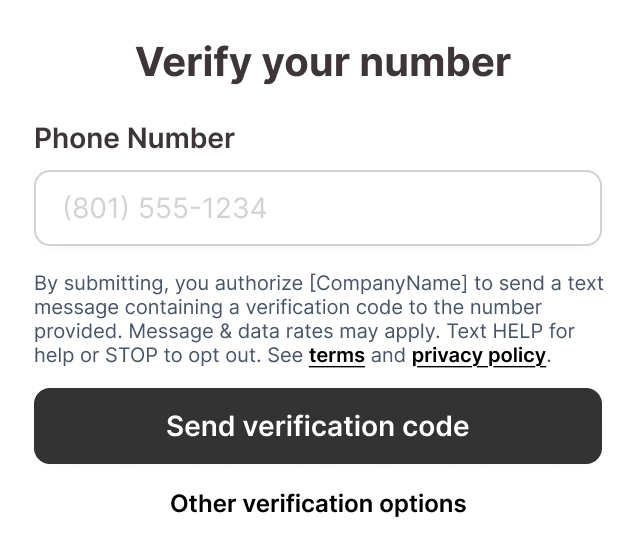
Opt-in checkbox label:“Use my phone number to receive one-time verification codes”Disclosure:
“We’ll send a verification code each time you sign in. Message frequency: one per login. Msg&data rates apply. Reply STOP to opt out.”
Customer care
Opt-in at ticket submission:“Text me updates about my support request”Disclosure:
“You’ll receive updates about your support case by text. Frequency depends on case activity. Msg&data rates apply. Reply STOP to opt out.”
Platform vs direct customer templates
If you’re a SaaS platform registering on behalf of clients, the brand name in every message should be the client’s brand, not your platform’s brand. The opt-in checkbox label, disclosure text, and confirmation message should all name the client.“I agree to receive text messages from Smith Realty”— not —
“I agree to receive text messages from YourPlatform on behalf of Smith Realty”Reviewers flag brand-in-disclosure mismatches. The message recipient should see one consistent brand name throughout: on the website where they opted in, in the SMS messages they receive, and in the registration you submitted.
Privacy policy requirements
Your privacy policy should ideally state that you collect phone numbers for SMS communication and describe how you use them. The first section should not imply that agreeing to the policy constitutes SMS consent — that’s a common rejection cause. The main thing the carriers look for in the privacy policy is making sure that SMS consent won’t be shared with third parties for things like lead generation and affiliate marketing. Whenever any data will be shared with third parties, we recommend adding the following line to the privacy policy to guarantee this: “All the above categories exclude text messaging originator opt-in data and consent; this information will not be shared with any third parties.” Minimum language to include in your privacy policy:“We collect your phone number to send you [describe use cases]. You may opt out at any time by replying STOP to any text message from us.”